Selecting the right aerial lift rental Utah depends on whether your project requires vertical capacity or horizontal reach. Scissor lifts offer stable platforms for multiple workers moving straight up, whereas boom lifts provide the articulated or telescopic extension needed to navigate over obstacles at greater heights.
Staring up at a project that remains just out of reach is a common frustration for contractors and property owners across Utah. Using the wrong equipment for high altitude work does more than slow your progress; it introduces unnecessary safety hazards and inflates your project budget. At Juab Rentals, we know that the success of your job depends on having the right platform under your feet. This guide explores the critical distinctions between scissor lifts and boom lifts, focusing on their unique applications for Utah construction and maintenance. You will learn how to evaluate your site requirements, navigate OSHA licensing standards, and manage rental costs effectively. By the end of this article, you will be prepared to select the specific aerial lift that maximizes both your reach and your return on investment.
Navigating Aerial Lift Options for Utah Construction and DIY
When a project scale grows beyond the safe capacity of a traditional extension ladder, an aerial lift becomes an essential tool on the job site. The term aerial lift serves as a broad umbrella for various motorized platforms, including scissor lifts, articulating booms, and telescopic machines designed to elevate personnel and materials to specific working heights safely. Juab Rentals provides professional equipment rental services from our hub in Spanish Fork, helping contractors and homeowners across Juab and Utah Counties identify the most efficient way to access elevated work areas.
Selecting the correct machine requires more than just knowing your target height. It involves balancing vertical elevation with horizontal outreach and accounting for the specific terrain of your environment. A contractor prepping a flat concrete warehouse floor in Orem has vastly different equipment needs than a homeowner trimming trees on an uneven residential lot in Nephi. The ground conditions, clearance for the base of the machine, and any obstacles between the ground and the work point dictate which model is appropriate. Finding a reliable aerial lift rental in Utah ensures that work is performed efficiently, but the process starts with understanding the mechanical limitations and strengths of each lift type. For guidance on machine specifications, contact our Spanish Fork team to discuss your site requirements.
The Scissor Lift: Best for Vertical Efficiency and Capacity
A scissor lift operates on a simple, mechanical principle; it moves strictly in a vertical direction. Using a linked, folding support system that resembles a pair of scissors, these machines push a large platform straight up from the base. Because the center of gravity remains directly over the footprint of the machine, scissor lifts are exceptionally stable and provide the highest weight capacity of any aerial lift rental Utah contractors typically utilize.
We categorize these machines into two primary types based on the work environment:
Lift Type | Power Source | Best Use Cases |
|---|---|---|
Electric Scissor | Battery / Electric | Indoor warehouse maintenance, HVAC installation, and retail facility repairs. |
Rough Terrain (RT) | Gas or Diesel | Outdoor construction, framing, and siding on unfinished or uneven ground. |
Electric models feature non-marking tires and quiet, zero-emission operation. This makes them the standard choice for interior projects in Spanish Fork or warehouse maintenance in Provo. Rough terrain models, conversely, come equipped with four-wheel drive and heavy-duty tires to navigate the loose soil or gravel often found on new Juab County job sites. For projects requiring high weight capacities, contact our Spanish Fork team to determine if a compact 19 foot model or a high-capacity 32 foot unit is required for your floor load.
The standout advantage of a scissor lift is the workspace. Unlike boom lifts, which usually feature small baskets, scissor lifts offer expansive decks that can often be extended further with a slide-out platform. This allows multiple workers to stand on the platform simultaneously alongside heavy tools and materials like conduit, piping, or drywall. This efficiency is why they are favored for repetitive tasks like installing fire sprinklers or lighting across a large ceiling area.
The primary disadvantage of a scissor lift is the lack of horizontal reach. These machines cannot reach over obstacles. If your work area is located behind a permanent structure, a landscaping feature, or fixed machinery, a scissor lift will not be effective. You must be able to position the base of the unit directly underneath the target work area to reach your destination safely.
The Boom Lift: Reaching High and Over Obstacles
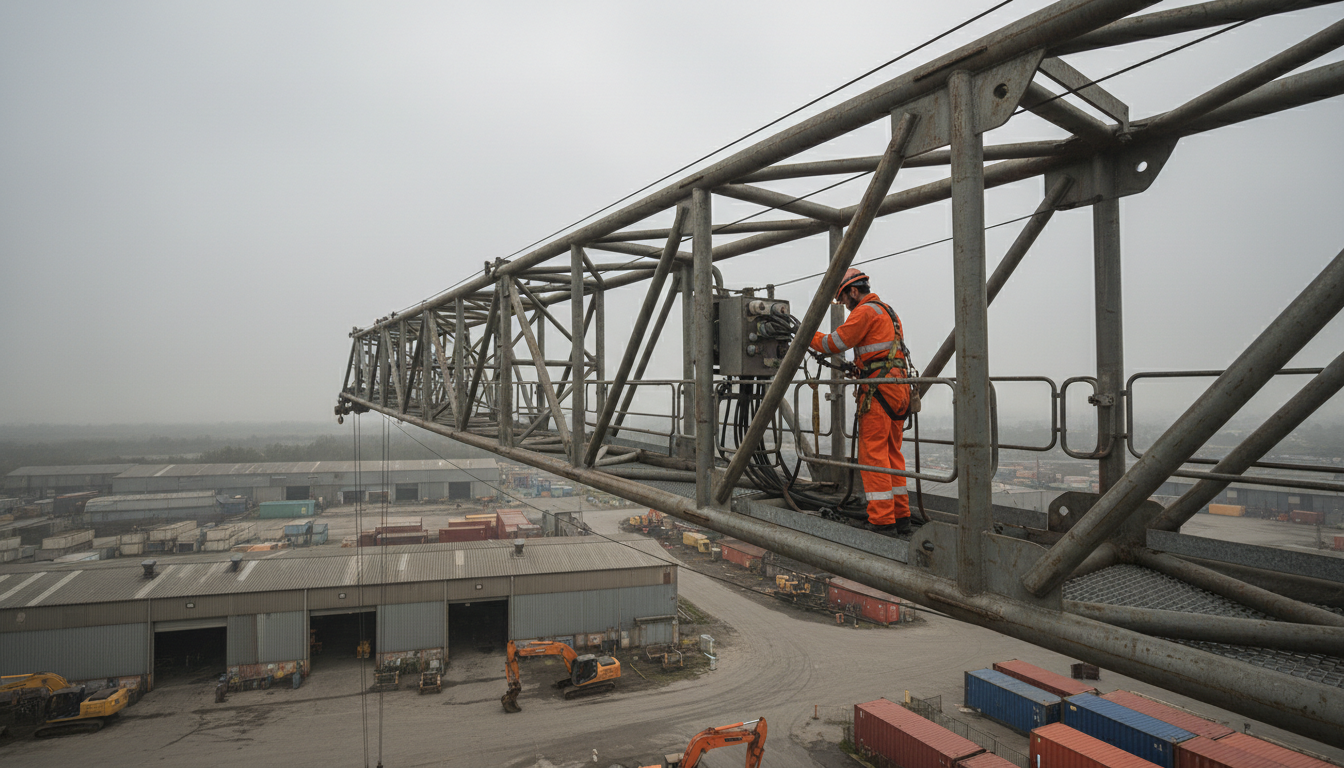
The boom lift, often referred to as a cherry picker or man lift, provides the specialized flexibility that a strictly vertical scissor lift lacks. These machines utilize a hydraulic arm to move a small work basket both vertically and horizontally, allowing operators to position themselves over obstacles or reach distant work points from a single parking spot. This capability is essential for job sites in Spanish Fork where ground-level obstructions like landscaping, parked vehicles, or structural foundations prevent a machine from sitting directly under the target area.
Selecting the right boom lift involves choosing between two distinct mechanical designs based on the path required to reach the work zone:
Boom Type | Movement Style | Primary Advantage |
|---|---|---|
Telescopic Boom | Straight, extendable arm | Maximum horizontal outreach and sheer vertical height. |
Articulating Boom | Multiple hinged sections | Ability to "up-and-over" obstacles like rooflines or interior trusses. |
Telescopic booms, also known as straight booms, are the preferred choice for projects requiring maximum reach across open space. They are ideal for high-rise exterior painting or steel erection where the machine can remain in a central location. Articulating booms, or knuckle lifts, offer a versatile series of joints that allow the basket to be maneuvered around corners or over obstructions. For complex tasks like tree trimming or repairing siding on a multi-level home in Nephi, the articulating arm provides the precision necessary to clear eaves and branches safely.
For residential users and DIY enthusiasts, a towable aerial lift rental offers a practical solution for weekend projects. These units are lighter than their self-propelled counterparts and can be transported with a standard pickup truck, making them highly accessible for properties in Utah County that may not accommodate a heavy semi-truck delivery. While boom lifts generally have smaller platform capacities than scissor lifts, typically limited to 500 to 1,000 pounds, their utility lies in their reach. They are the standard for tasks where the worker must be elevated to a specific, hard-to-reach point. To explore specific model dimensions and reach capabilities, contact our Spanish Fork team for expert advice on our professional equipment rental services available for your next project.
Key Factors for Selecting an Aerial Lift Rental in Utah
Identifying the right machine requires looking beyond the maximum vertical limit. To secure an efficient aerial lift rental Utah operators must evaluate the specific physical constraints of the site and the volume of materials being moved.
### Work Height vs. Platform Height One of the most common mistakes is confusing platform height with work height. Platform height refers to the elevation of the floor of the basket or deck. Work height is generally calculated by adding six feet to that number, representing where an average worker can comfortably reach. If you need to install lighting at 25 feet, a 19 foot scissor lift is usually sufficient. Overestimating this can lead to renting a larger, more expensive machine than necessary, while underestimating it can compromise safety by forcing workers to stand on the mid-rails.
### Horizontal Outreach Requirements A project requiring you to move up and over a fence or reach across a landscape bed demands a boom lift. While a scissor lift provides a rock-solid, stable feel because the load remains centered over the chassis, it offers zero horizontal movement. If the base cannot be parked directly under the work point, reach becomes the deciding factor.
### Terrain and Environment Select your power source and tire type based on the surface. Use electric motors with non-marking tires for indoor warehouse work to protect floors and maintain air quality. For outdoor construction on the uneven slopes found in rural Juab County, choose dual-fuel or diesel engines equipped with four-wheel drive and outriggers for necessary stabilization.
### Load Capacity Evaluate the combined weight of your crew, their tools, and any materials like HVAC units or heavy signage. Scissor lifts excel here, often supporting 1,000 pounds or more, whereas boom lifts are typically restricted to 500 pounds. For heavy-duty installations, contact our Spanish Fork team to match a high-capacity machine to your specific professional equipment rental services needs.
Aerial Lift Licensing and OSHA Requirements in Utah
One of the most frequent questions we receive at our Spanish Fork office is whether you need a license to operate an aerial lift in Utah. The short answer is no; the state does not issue a government-mandated operator license similar to a driver's license. However, safety compliance is governed by OSHA (Occupational Safety and Health Administration) standards, which are strictly enforced on commercial job sites throughout the region.
OSHA mandates that any employee operating a lift must be trained and certified on the specific type of equipment they intend to use. A certification for a scissor lift does not automatically qualify an individual to operate an articulating boom. For commercial contractors utilizing an aerial lift rental Utah providers offer, the employer is legally responsible for providing and documenting this training. This includes instruction on load capacities, fall protection, and the specific emergency controls of the machine.
For residential DIYers in Juab County, the legal requirements are less formal, yet the safety risks remain identical. The responsibility lies with the operator to thoroughly study the safety manual provided with the rental. Juab Rentals staff provide a basic orientation on controls and safety features during pickup or delivery, but the user must ensure they are competent to manage the machine on their specific terrain.
Fall protection is another critical requirement. While scissor lifts rely on guardrails for safety, boom lift operations require a full-body harness and a lanyard attached to a designated anchor point. This gear is essential to prevent the catapult effect, which can occur if the machine base encounters a sudden dip or obstacle. To ensure you have the right safety gear for your project, contact our Spanish Fork team to discuss our professional equipment rental services and available safety accessories.
Aerial Lift Rental Prices and Local Availability
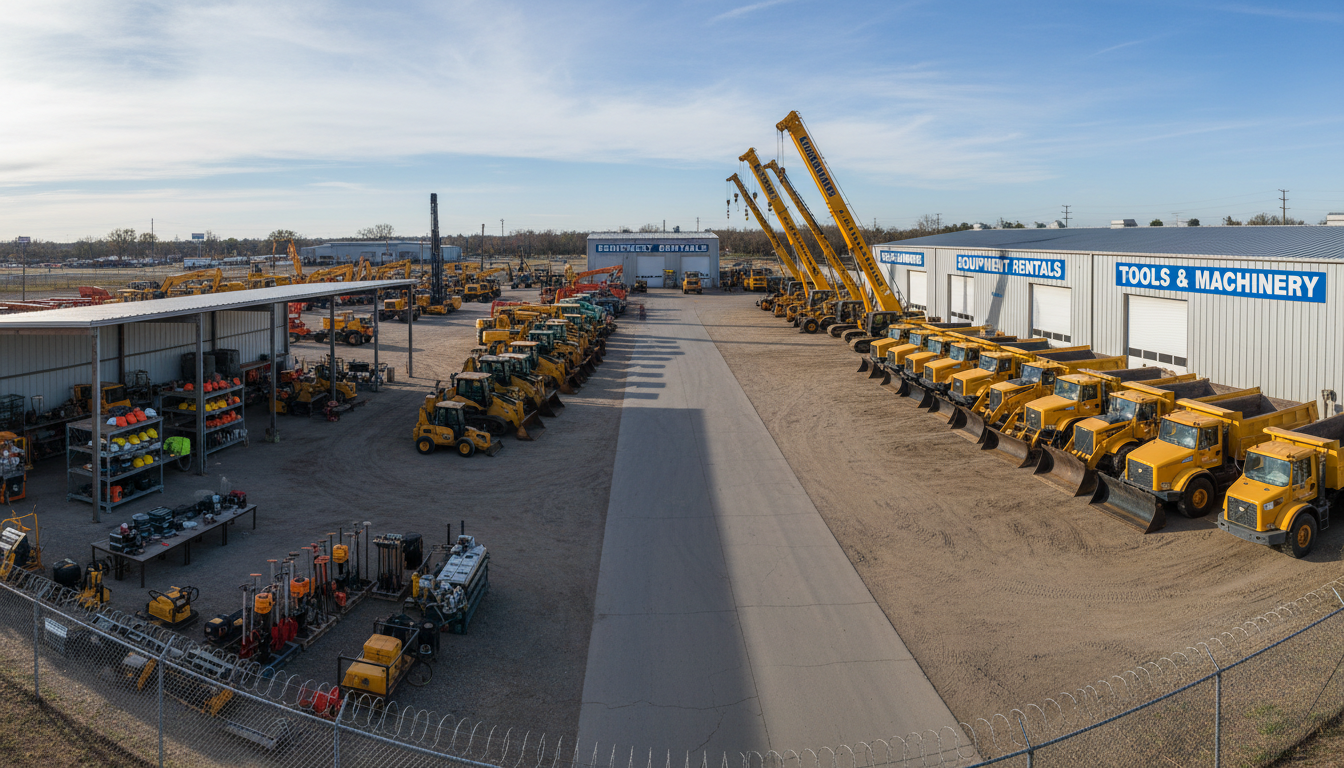
Budgeting for an aerial lift rental in Utah involves understanding the specific variables that impact the total cost. Generally, aerial lift rental Utah prices range from $150 to $500 per day, depending largely on the size and complexity of the machine. A compact electric scissor lift sits at the lower end of that scale, while heavy duty rough terrain boom lifts command higher rates due to their mechanical reach and fuel requirements.
Several factors beyond the base rate influence the final invoice:
Rental Duration: Choosing a weekly or monthly rate significantly reduces the daily cost compared to a single day rental.
Delivery Fees: Transporting large machinery to locations like Provo or Payson requires specialized haulers. Fees are typically calculated based on the distance from our Spanish Fork facility.
Fuel and Maintenance: For diesel or dual-fuel models, fuel surcharges apply if the machine is not returned full.
Because every job site in Juab County has unique logistical needs, contact our Spanish Fork team to get a specific quote for your professional equipment rental services. We provide transparent pricing that accounts for your specific project timeline and delivery requirements.
Choosing between a boom lift and a scissor lift ultimately depends on your specific workspace and reach requirements. Making the right choice ensures that your project remains both safe and productive. If you would like expert assistance in evaluating your job site, our experienced team is ready to help. You can learn more about our history and commitment to service to see how we provide tailored equipment solutions. We want to ensure you have the best tools for your success; so please reach out if you have any questions.